
A whole home generator makes sense when a long outage would cost you more than the system: frozen pipes, a flooded basement, pool equipment, a family member who can't easily leave. January's ice storm showed how long "long" can be. Before one goes in, we weigh five things: what would break first, how big it needs to be, fuel, permits and placement, and who keeps it running.
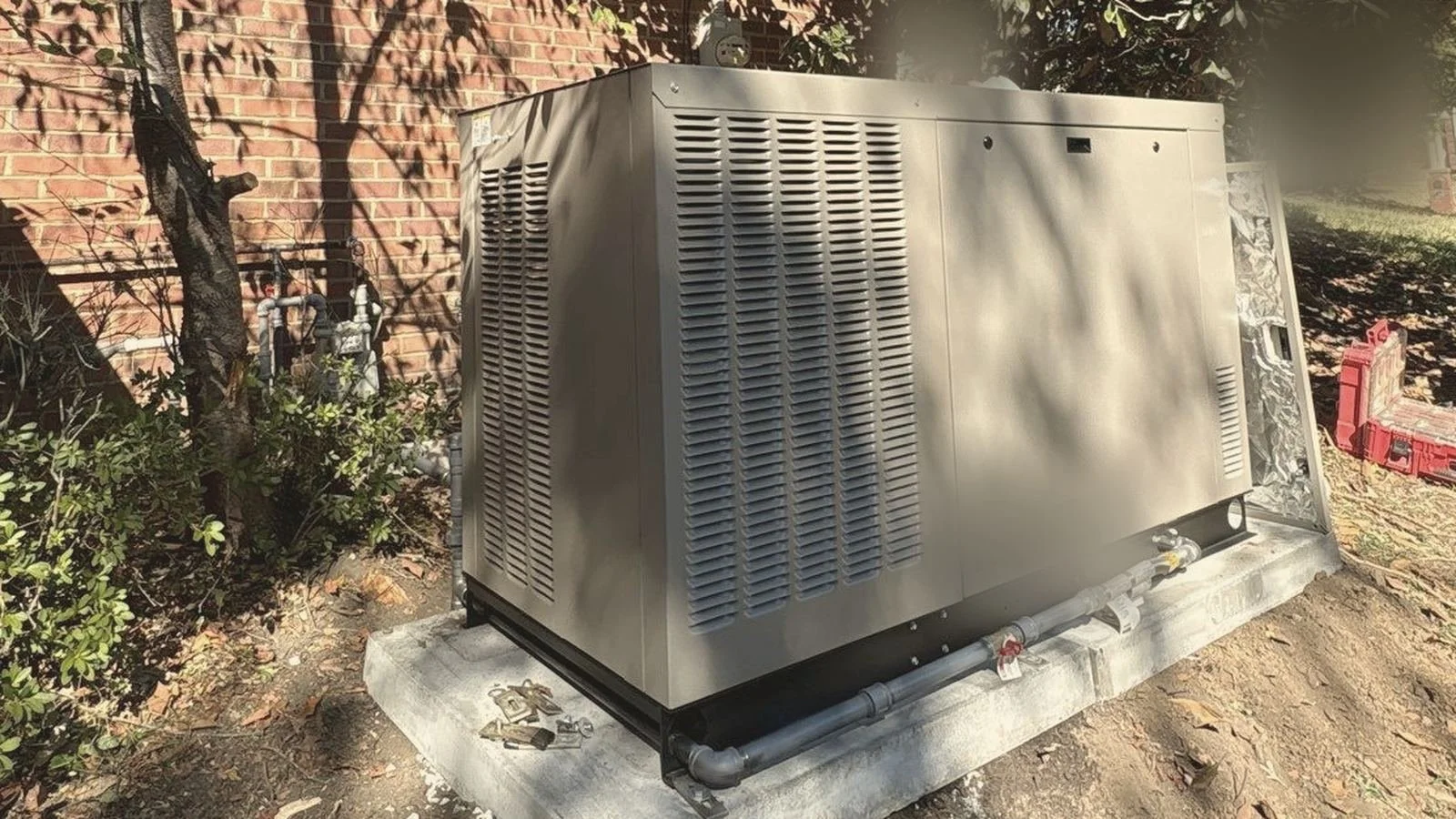
A whole-home standby generator, sized so no one has to pick which circuits stay on.
What did January's ice storm teach us?
Outages peaked at 230,000 Nashville Electric Service customers, and it took 13 days to restore 99.9% of them, per WSMV. Middle Tennessee Electric, which serves Brentwood and Franklin, peaked at 23,479 outages, mostly in western Williamson County.
Power loss in winter doesn't stay a power problem. The heat goes, then the pipes. In January, we saw pool equipment freeze and burst, fireplace stones damaged from gas logs running for days, and trees down that cost thousands to remove.
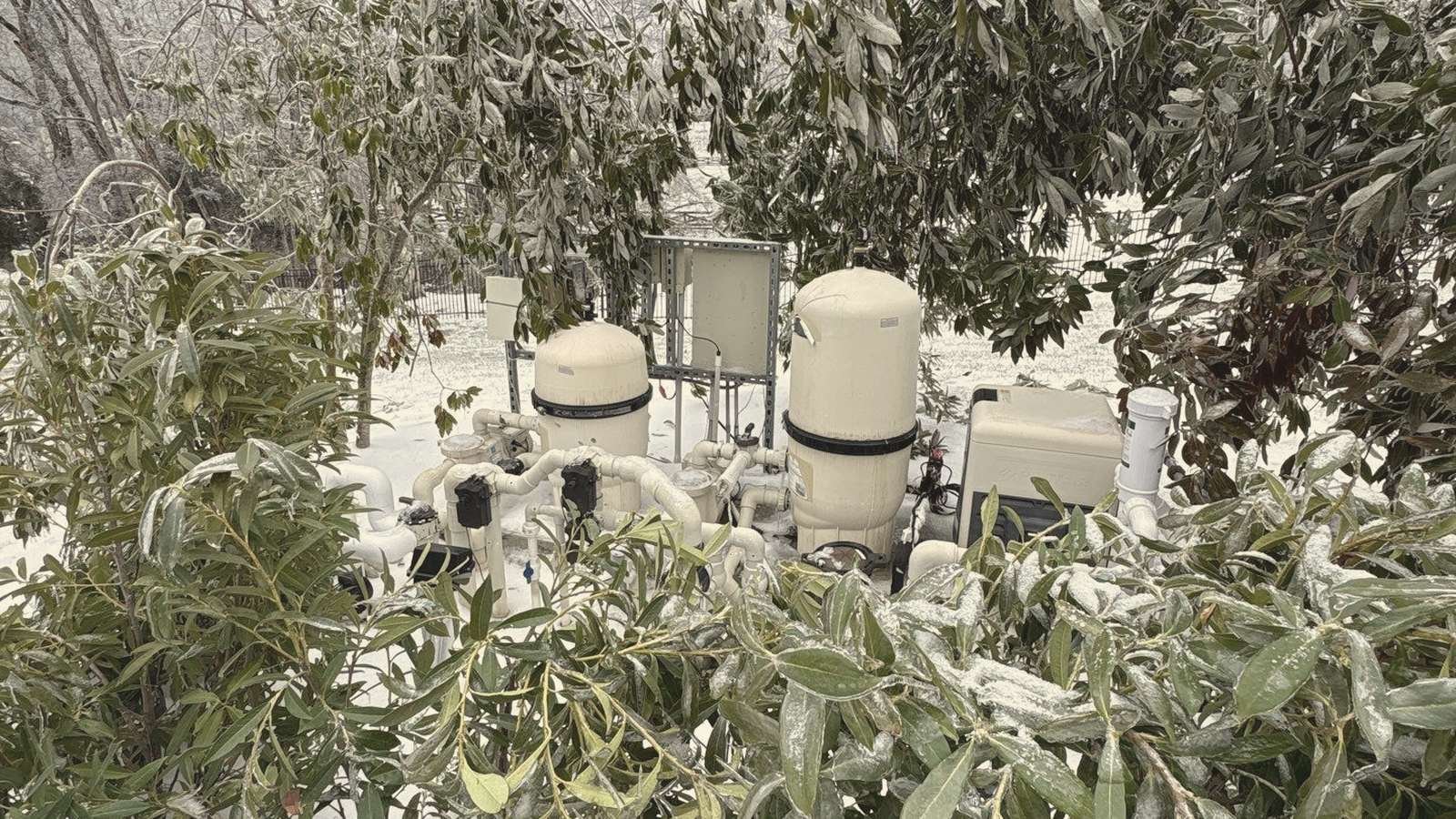
January: pool equipment under ice, with no power to run the pumps.
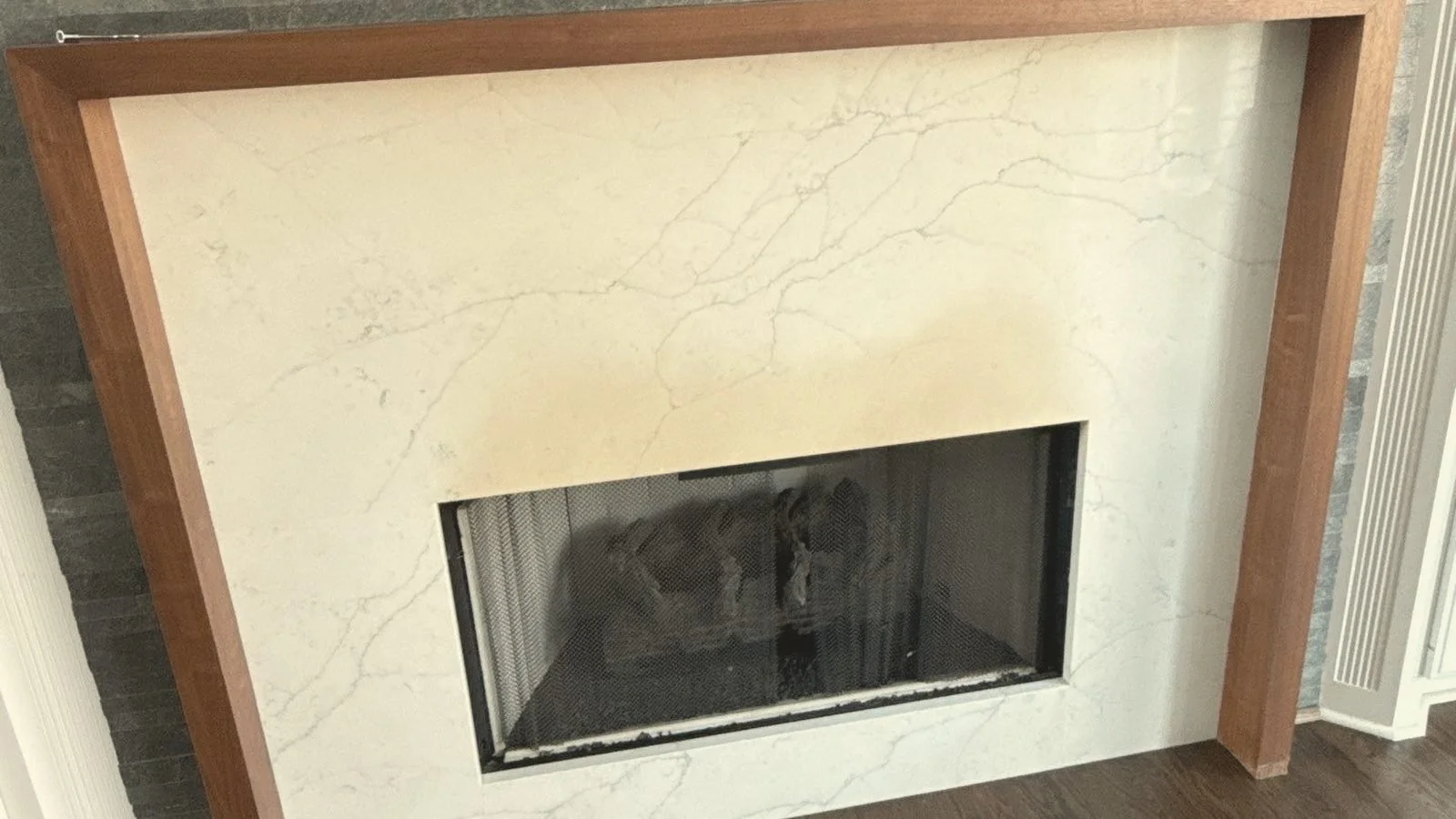
Heat damage on the stone above a gas log fireplace, last winter.
It also showed what people do without a plan. WSMV reported that Monroe Carell Jr. Children's Hospital at Vanderbilt treated 46 patients for carbon monoxide exposure in two days, from generators and gas stoves used for heat. The state handed out carbon monoxide detectors with donated generators, per TEMA.
Do you need a whole home generator?
Not every home does. These are the questions we ask first:
What breaks first in your house without power? A sump pump, a well pump, pool equipment, pipes in a crawlspace, a wine room, a refrigerator full of food.
Who's home? Someone who works from home, a parent who lives with you, anyone who can't simply pack up for a hotel.
How often is the house empty? An empty house in an outage has no one to open cabinets, drip faucets or call for help.
What does your HOA allow? In January, WSMV reported a Nashville HOA told a family to remove their generator in the middle of the outage. Get the rules in writing before you buy.
Standby or portable generator: what's the difference?
A standby generator sits outside on a pad, runs on natural gas or propane, and starts on its own. An automatic transfer switch moves the house to generator power when the grid goes down, then back when it returns, per Angi.
A portable generator needs someone to roll it out, fuel it and plug things in, in the dark and the cold. It's also where the danger is. The CPSC says nearly 100 people in the U.S. die each year from carbon monoxide from portable generators. Run one outside only, at least 20 feet from the house, never in a garage, porch or carport, per the CPSC and CDC.
What size generator does your home need?
There are two approaches. A whole-home system carries the entire electrical service. An essential-circuits system carries a short list, like the furnace, refrigerator, sump and a few lights, and someone decides what stays on.
Angi's sizing guide puts a 2,500-square-foot home at about 20 to 25 kW, with more for multiple air conditioners. A licensed electrician should do a load calculation for your house, not a rule of thumb.
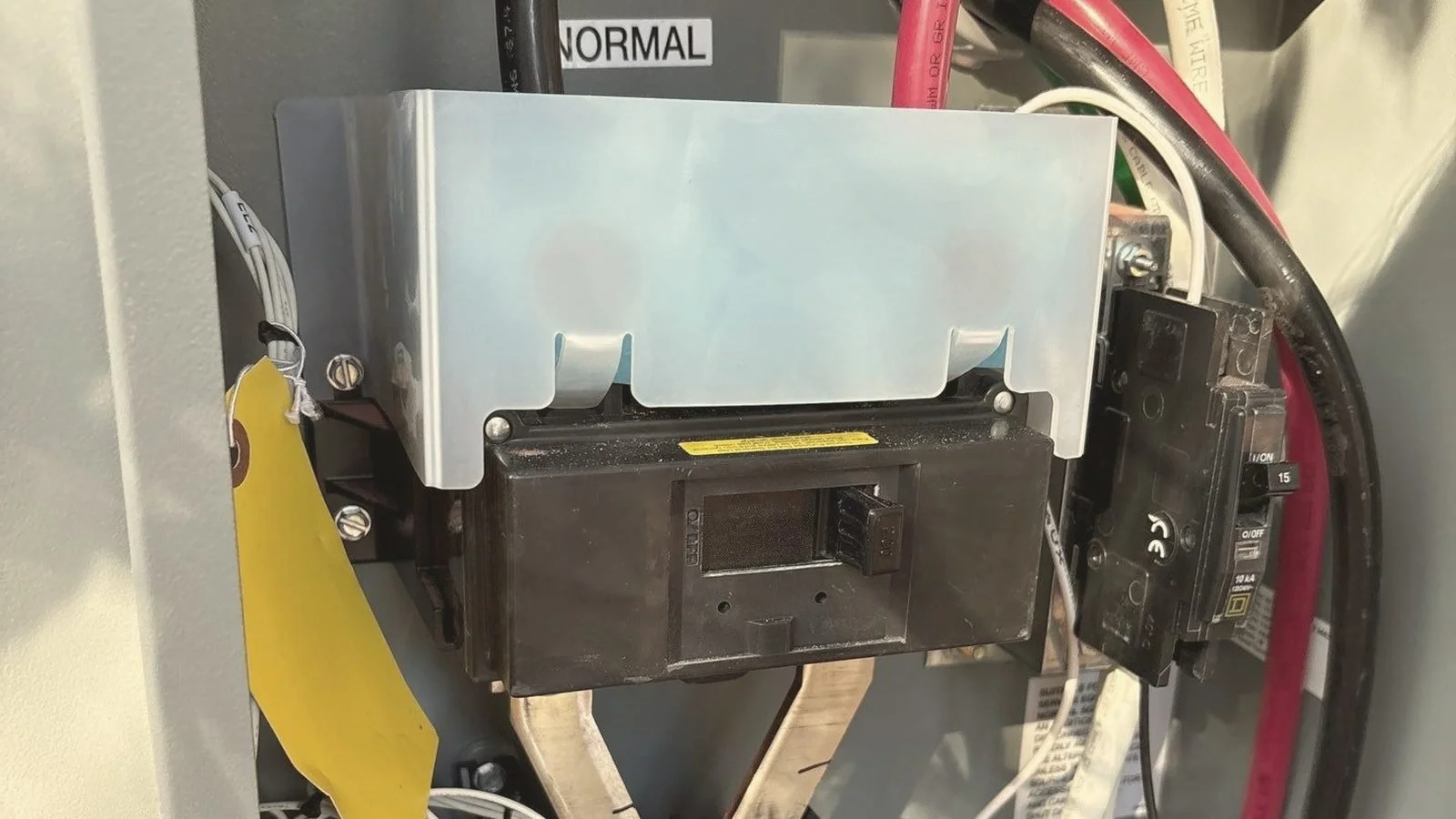
The automatic transfer switch: it does the switching so nobody has to.
From the field: One home we manage wanted to stop choosing circuits during an outage. We had two quotes compared line by line for the owner: size, what each would cover, surge protection, warranty, maintenance and how long the house would be without power during the install. The owner chose a system sized for the home's full 200-amp service, with an automatic transfer switch, surge protection, the pad, the gas work and the permits in one scope. When the power goes out, nobody in that house has to decide what stays on.
What does a whole home generator cost?
We don't publish what our clients pay, and every house is different. For a national picture, Angi puts a 20 to 24 kW installed system at about $5,000 to $6,500 and a 26 to 32 kW system at about $6,500 to $15,000. Fuel matters too: Angi estimates natural gas at about $1 to $3 an hour to run, and propane at about $10 an hour, plus tank refills.
What goes into a generator install in Brentwood?
Permits. Brentwood doesn't issue electrical permits. Per the City of Brentwood, they go through the State of Tennessee, and a state electrical inspector signs off.
Placement. Manufacturers set clearances based on NFPA 37. Generac, for example, calls for at least 5 feet from operable windows, doors and vents. Local code wins where it's stricter.
Gas. A natural gas unit needs a line run and sized for it.
Surge protection. The 2020 National Electrical Code requires a surge protective device on every home's electrical service when the service is new or replaced, per Electrical Contractor. Surges can also hit when the power comes back on after an outage, per Pedernales Electric Co-op.
HOA approval, in writing, before anything is ordered.
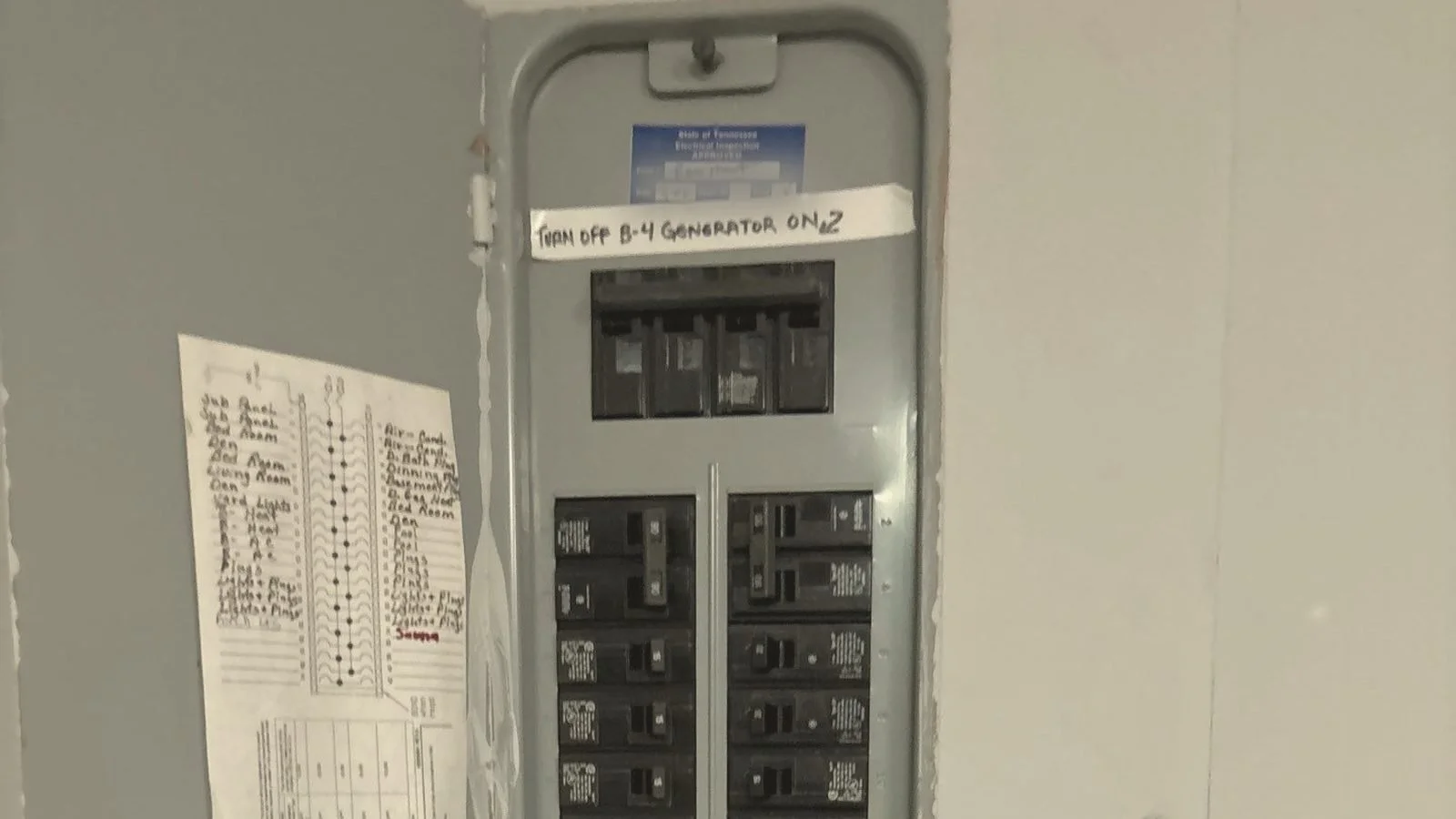
The finished install: state inspection sticker on the panel, and a label anyone in the house can follow.
How do you maintain a standby generator?
A generator you never check is a guess. Most standby units run a short self-test on a schedule. Generac's can be set to weekly, every two weeks or monthly. Generac also calls for an oil change after the first 25 hours of running and at set intervals after that, plus a yearly check of the battery and fuel system.
After the first real outage, we confirm it started, carried the house, and switched back on its own. Then it goes on the calendar for service before every winter.
How does Home CEO help with a generator?
We start with what would break first in your house, not with a sales pitch. Then we bring in electricians from our vetted vendor network, get quotes compared line by line, and lay out the options. You make the decision. We manage the install, the permits and the inspection, and we keep the generator on the maintenance calendar after. We have no financial relationship with any vendor, so we have no reason to sell you a bigger system than you need.
Getting ready for winter? Start with how to winterize your home in Nashville.
Frequently asked questions
Is a whole home generator worth it in Middle Tennessee?
It depends on what an outage would cost your house. If a week without power would mean frozen pipes, a flooded basement or moving your family out, it's worth pricing. January's ice storm took 13 days to fully restore in Nashville.
Do I need a permit for a standby generator in Brentwood?
Yes. Brentwood sends electrical permits to the State of Tennessee, and a state inspector signs off. Check your HOA's rules too.
Can I run a portable generator in my garage with the door open?
No. The CPSC and CDC say outside only, at least 20 feet from the house, and never in a garage, carport or porch, even with the door open.
How often does a standby generator need service?
It should self-test on a schedule, and the manufacturer sets oil and battery intervals. For the homes we manage, we schedule service before every winter and check it after any real outage.
Want a second set of eyes before you buy?
Home CEO manages homes in Brentwood, Franklin, Nashville and across Williamson County as if they were our own. We do the legwork, compare the options and bring you only the decisions you want to make.
