
Every December someone asks me, "Do we really need to do anything to the house before we leave?" Yes. Your house doesn't know you're on vacation. It just knows nobody's there to notice the drip.
Here's how to protect an empty home in Brentwood before you lock the door: heat at 55°F or higher, water off or a smart shutoff on it, mail on hold, and someone who will actually walk inside every week. A drive-by doesn't count.
Why I take empty houses personally
Seven years ago, a pinhole leak in my powder bath let go overnight. We were home. We still lost two floors and spent a year and a half rebuilding.
Now picture that same leak in a house nobody walks into for ten days.
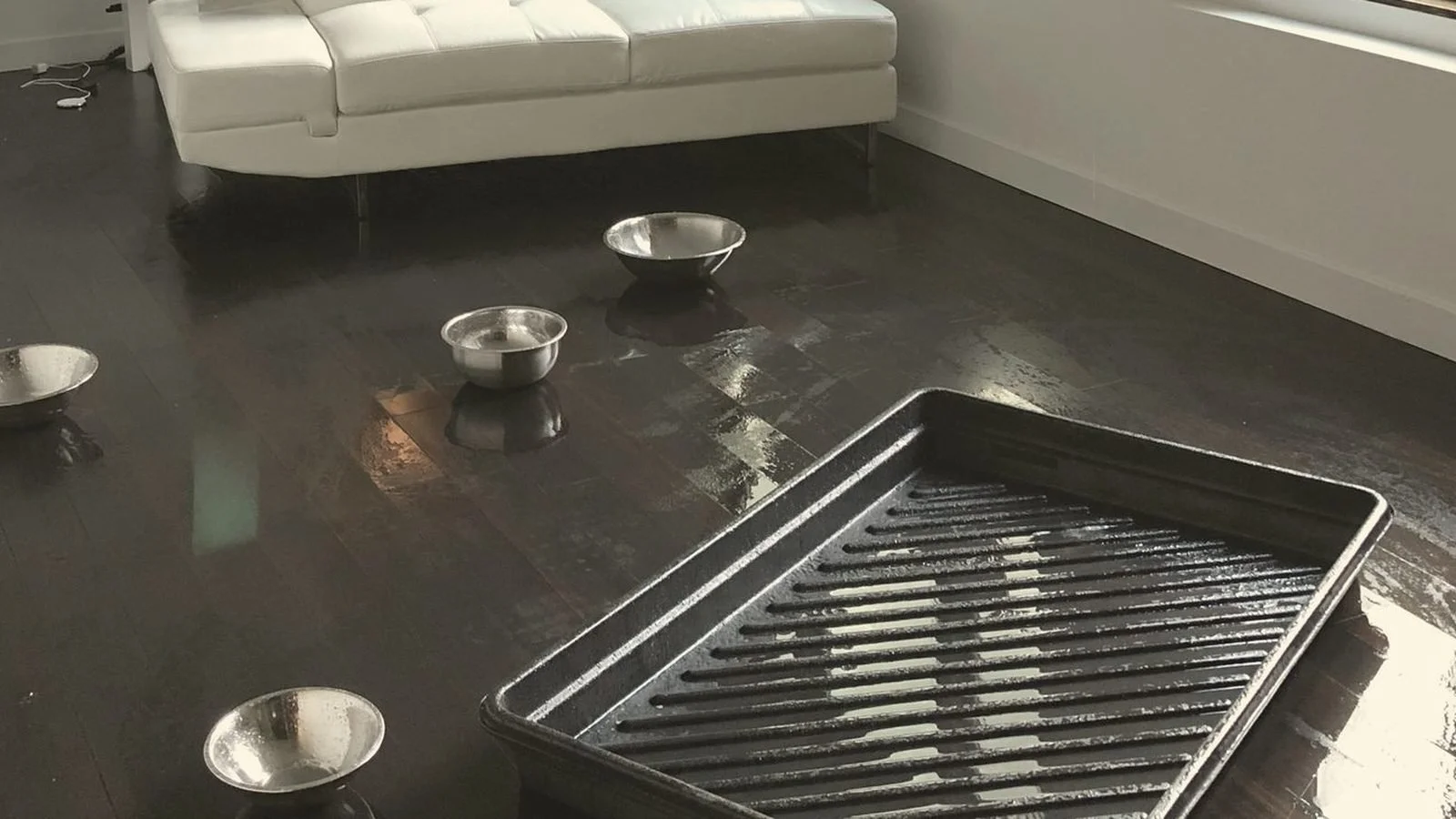
My living room the morning after a pinhole leak, seven years ago.
I'm not the only one with a story like this. State Farm says it paid more than $432.5 million on more than 17,200 frozen pipe claims in 2023. And holiday travel here lands right in freeze season: the National Weather Service puts Nashville's average first freeze on October 29. Your trip and the first hard cold snap are going to overlap. Plan for it.
What temperature should you leave the heat on in winter?
No lower than 55°F, per State Farm. On, not off. Yes, you'll be paying to heat a house nobody's in. It's still cheaper than a new kitchen ceiling.
Open the cabinet doors under the sinks too, so warm air reaches the pipes (a Union Mutual tip). Your bathroom will look like someone searched it. That's fine.
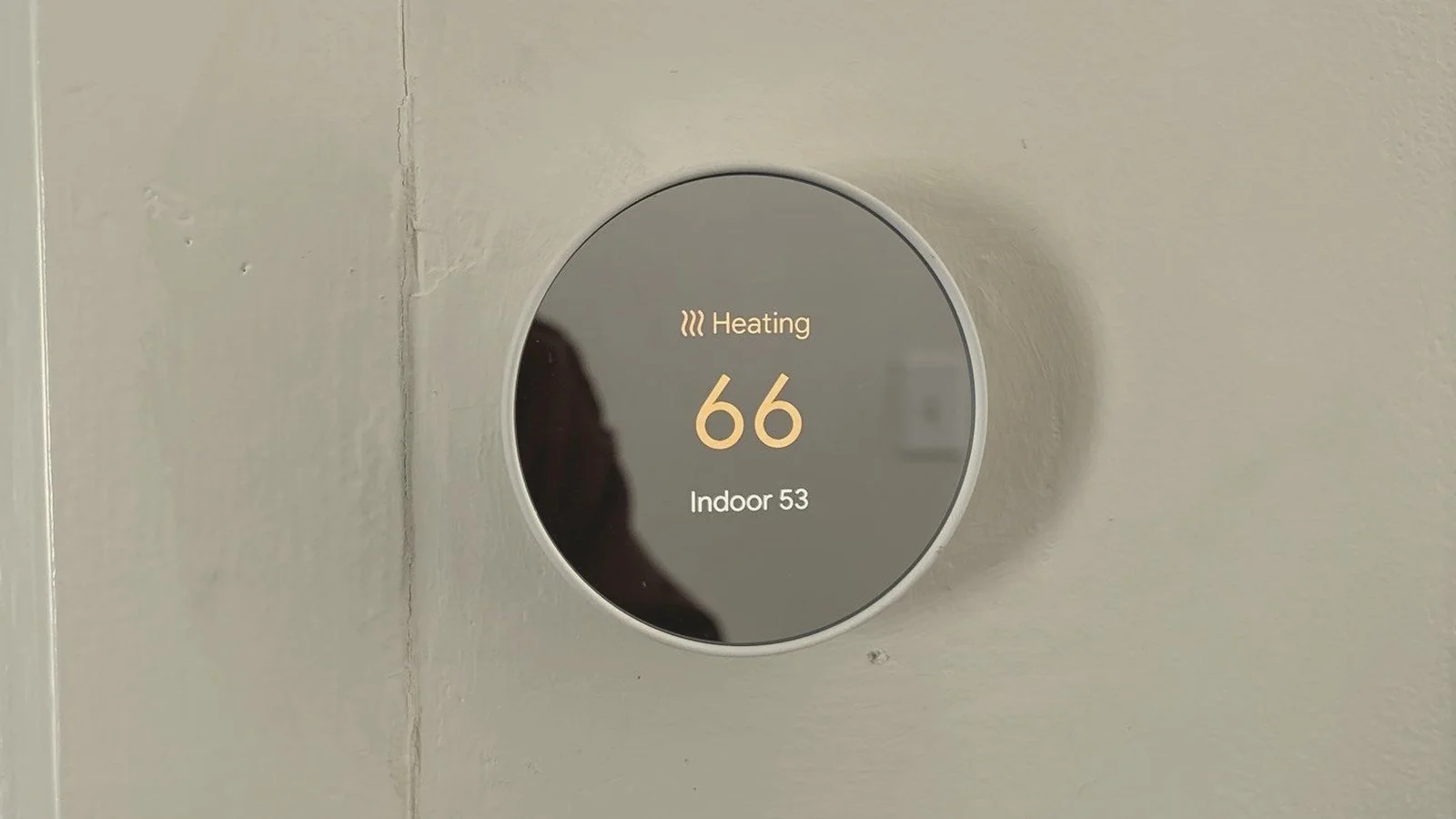
Heat on, not off. State Farm says no lower than 55°F.
Outside, disconnect every hose and cover the spigots before you go. Here's how to winterize outdoor faucets.
Should you turn off the water when you leave?
For a long trip, State Farm says shut it off and drain the system. One catch, also from State Farm: if your house has fire sprinklers, shutting off the water may shut them off too. Ask your plumber what has to stay on in your house.
My route is an automatic water shutoff valve on the main line. After what happened to us, I'm a little evangelical about these. When it sees water moving that shouldn't be, my phone finds out before my floors do, and the valve can close the main line.
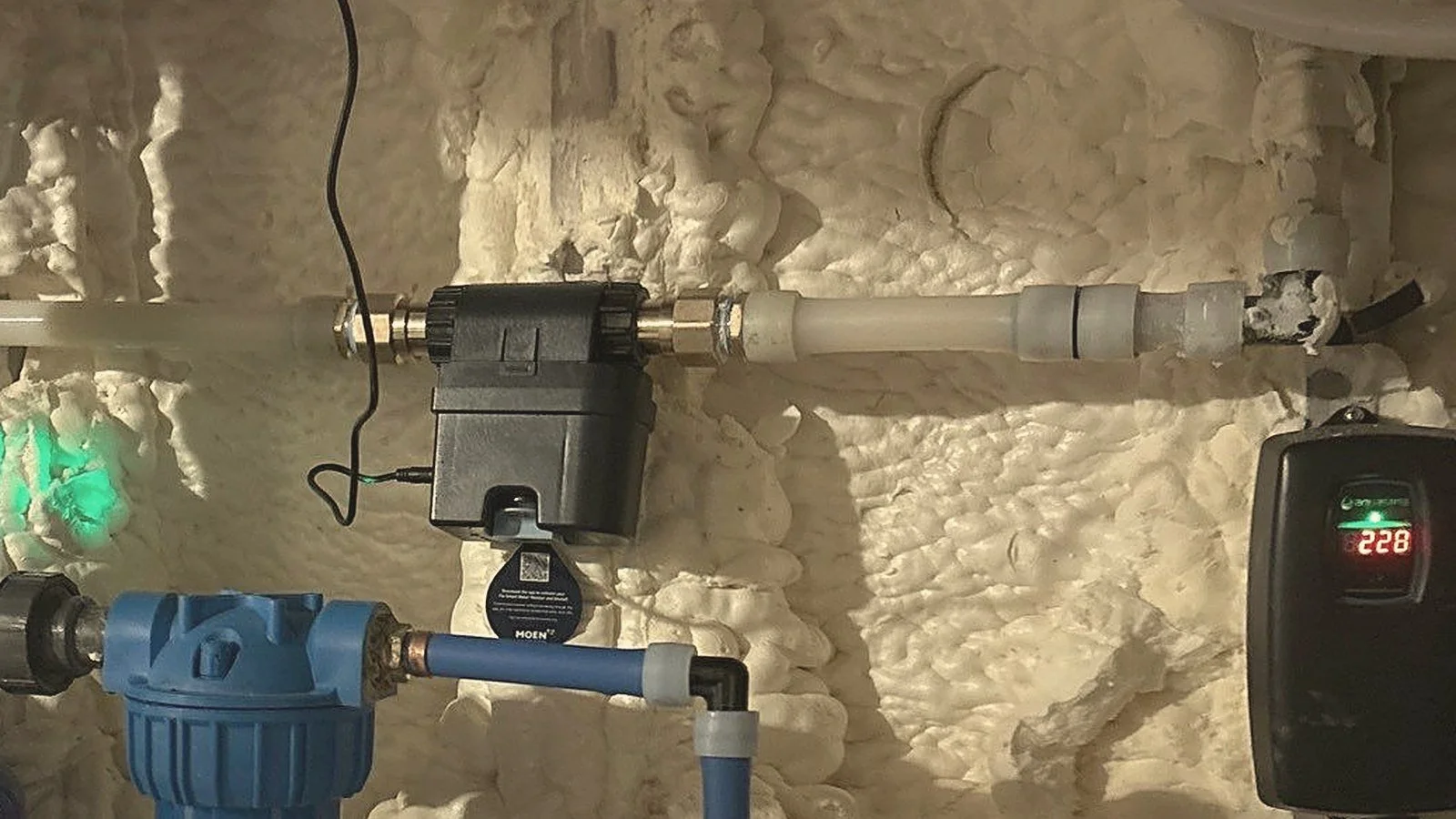
A smart shutoff on the main line at a home we manage.
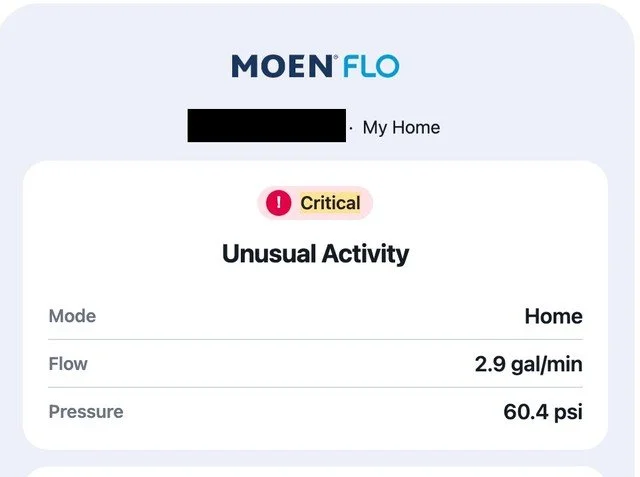
The kind of alert you want while you're away. This one is from my own valve.
Two things we've learned installing them: the valve needs an outlet nearby and strong Wi-Fi where it sits. Test both before you count on it from a thousand miles away.
Who should check on your house while you're gone?
Someone who goes inside. A drive-by tells you the house is still standing. That's about it. Union Mutual warns that a delay in finding and stopping water damage "can substantially increase the severity of the loss." My translation: the leak you find on day 2 is a bad week. The one you find on day 10 is a bad year.
A neighbor with a key beats no one. Hand them this list:
The heat is running and the house feels warm.
No water on floors or ceilings, under sinks, or around the water heater.
Doors and windows are locked.
Packages are picked up.
Nothing looks off outside: a gate open, a tree limb down, a light out.
For mail, USPS Hold Mail will hold it for up to 30 days, and you can request it up to 30 days ahead. A pile of packages on the porch is basically a sign that says "nobody's home."
What we do for the homes we manage
At Home CEO, our Home Operations Director runs a documented 100+ point check every week, home or away. When we find something, we don't text you a photo and wish you luck. We bring in the right vendor from our vetted vendor network, track it and follow up until it's closed. You make only the decisions you want to make.
From the field: On a routine weekly check at one home we manage, our Home Operations Director saw the irrigation controller showing a low battery on its rain sensor. We read the manual and changed the battery. The controller still couldn't see the sensor. Now it's on every weekly check until the irrigation team looks at it, and it goes in the home manual. Small, easy to miss, and nobody would have seen it in a house left empty for two weeks.
One couple who split their time between Franklin and another state described what that felt like:
"Home CEO communicates weekly with reports and updates. They arranged their home visits to coincide with deliveries... Elizabeth and Home CEO made themselves available for conversations whenever we wanted and have made trips to our Franklin home when something didn't seem right." — Michael & Carlyn B., Home CEO clients
Does homeowners insurance cover an empty house?
This is the boring part. Read it anyway. Three things to look for in your policy:
Freezing. Many policies won't cover freeze damage in an unoccupied home unless you kept the heat on, or shut off the water and drained the plumbing.
Time away. Per the Texas Office of Public Insurance Counsel, some policies won't cover theft or vandalism if you're gone more than 60 days.
Vacancy. Per Merlin Law Group, many policies treat a house as vacant after 30 to 60 days, and a vacancy clause can limit coverage.
Call your agent and ask how your policy treats an empty house, and for how long. Ten minutes on the phone now beats hearing it from a claims adjuster later.
Your checklist to protect an empty home before you leave
Heat on, 55°F or higher.
Cabinet doors open under sinks.
Hoses off, covers on every outdoor faucet.
Water off and drained, or a smart shutoff you've tested.
Mail on hold.
A call to your insurance agent.
Someone with a key who will go inside every week, and your number.
Frequently asked questions
What should a weekly check on an empty house include?
At minimum: heat, water, locks and the outside of the house. Home CEO's weekly check is a documented 100+ point inspection, and when it finds a problem, we manage the fix.
How often should someone check an empty house in winter?
We check the homes we manage every week, all year. If someone else is checking for you, ask for at least one walk-through a week and a short note or photo after each one.
What temperature should I leave my house at when I travel in winter?
No lower than 55°F, per State Farm. Leave the heat running, not off, and open cabinet doors under sinks.
Do you only check homes when owners travel?
No. Our weekly check runs year-round, home or away. Holiday travel is when it matters most. Home CEO manages homes in Brentwood, Franklin, Nashville and across Williamson County.
Leaving soon?
Book a 15-minute discovery call. We'll talk through your house and what you'd want checked while you're gone. Then go enjoy your trip.
